Understanding Pre-Engineered Steel Frameworks for Industrial Construction
According to SG STEEL, the company has released engineering documentation on pre-engineered heavy structural steel frameworks, with attention to fabrication methods and quality-control standards.
Alaric Calloway·updated September 11, 2026
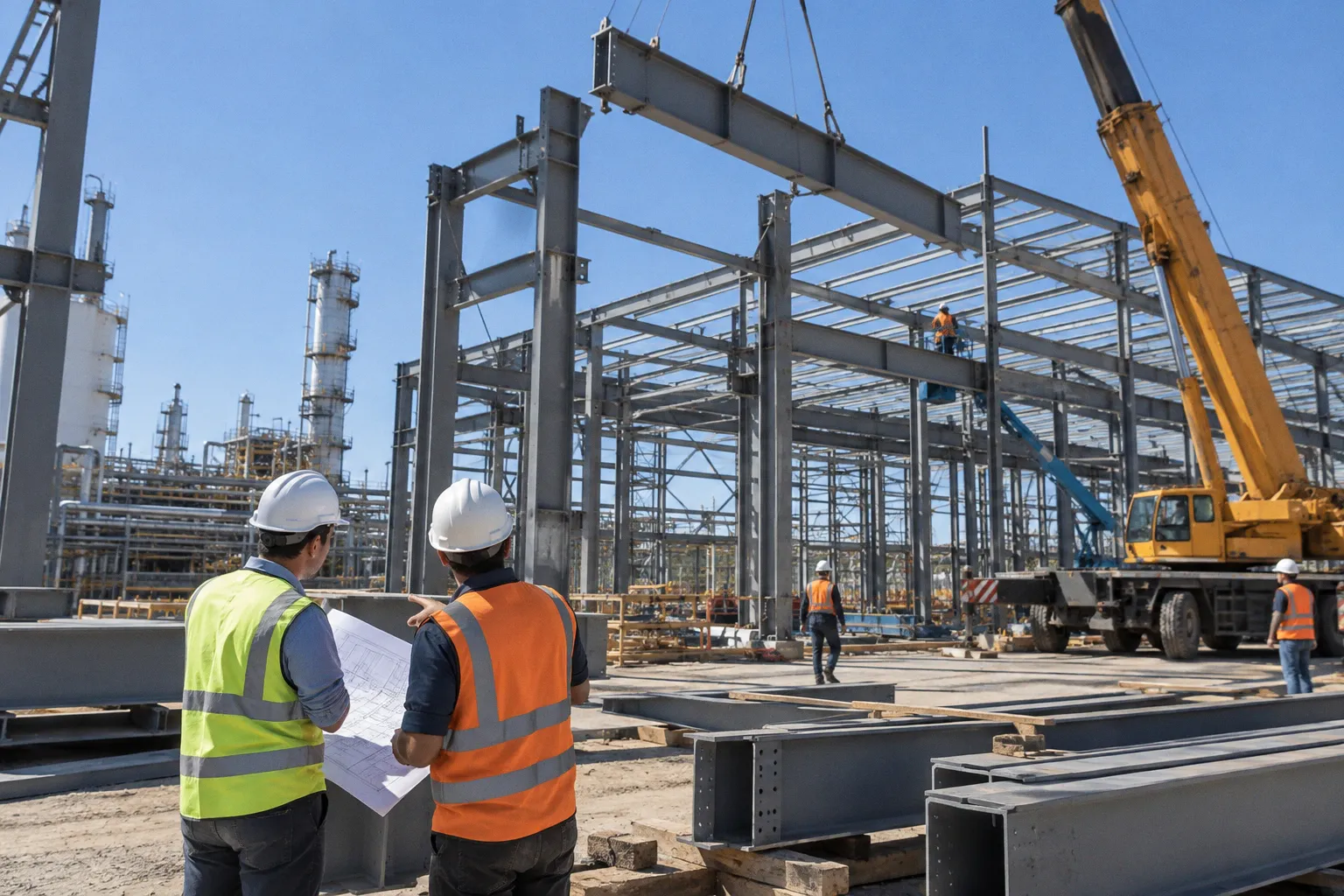
The material presents these systems as an approach for complex industrial facilities where installation speed must be balanced against structural integrity and load compliance. For engineers and project buyers, the important point is not the label “pre-engineered,” but how the documented fabrication and verification process controls risk before steel reaches the site.
The system is defined by controlled fabrication
A pre-engineered steel building system is not simply a collection of steel members assembled from a standard catalogue. In the documentation described by SG STEEL, the central subject is a heavy structural framework whose fabrication is planned in advance and governed by defined engineering procedures.
That distinction matters on industrial projects. The schedule advantage of prefabrication exists only when design information, fabrication methods, inspection points, and site installation requirements are aligned. If those stages are treated as separate activities, the system can transfer uncertainty from the workshop to the construction site rather than removing it.
SG STEEL’s release focuses on fabrication methodologies and quality-control standards. The available source material does not provide a complete list of structural components, connection types, steel grades, or production tolerances. Those details should therefore be verified in the full engineering documentation rather than inferred from the general term “pre-engineered.”
Installation speed depends on verification
The stated objective is to accelerate industrial installation schedules while maintaining structural integrity and load compliance in complex facilities. These are related but separate performance requirements.
A shorter installation sequence has limited value if the fabricated elements require rework, if inspection records are incomplete, or if the delivered framework does not match the approved design basis. Conversely, a structurally compliant system may still create schedule pressure if fabrication planning does not account for delivery and assembly constraints.
The practical review should therefore follow the load path and the production path:
- Identify which structural framework is covered by the engineering documentation.
- Confirm how fabrication methods are linked to the approved design.
- Check which quality-control stages are defined before shipment or installation.
- Establish how load compliance is demonstrated for the intended facility.
- Compare the documented installation strategy with the actual site sequence.
- Record which requirements remain subject to project-specific engineering.
This is not a substitute for a structural review. It is a way to determine whether the claimed schedule benefit is supported by a controlled process.
What industrial buyers should request
The announcement is relevant to industrial steel construction because it places fabrication quality and installation planning in the same discussion. That is the correct evaluation frame for heavy frameworks used in complex facilities. A workshop process cannot be assessed independently from the loads, interfaces, and assembly conditions that govern the finished structure.
However, the available source is a release summary, not the full technical package. It confirms the subject of the documentation but does not establish performance data, project results, certifications, delivery times, or a universal construction method. None of those points should be treated as confirmed from the announcement alone.
Before procurement or technical approval, buyers should request the complete documentation and isolate four items: the design scope, the fabrication procedure, the quality-control plan, and the method used to demonstrate load compliance. They should also identify which decisions require project-specific calculations and which are covered by standardized engineering documentation.
The useful signal in SG STEEL’s release is procedural. Pre-engineered construction can improve industrial installation planning when fabrication is disciplined and verification is explicit. The next step is not to accept the term as a performance guarantee. It is to inspect the evidence connecting design, production, inspection, and site assembly.