Kenya Sets September Groundbreaking for Massive Sh2.2 Trillion Lamu Refinery
By September 30, Kenyan officials expect to break ground on a 700,000-barrel-per-day petroleum refinery in Lamu, according to reporting from The Star.
Alaric Calloway·updated September 12, 2026
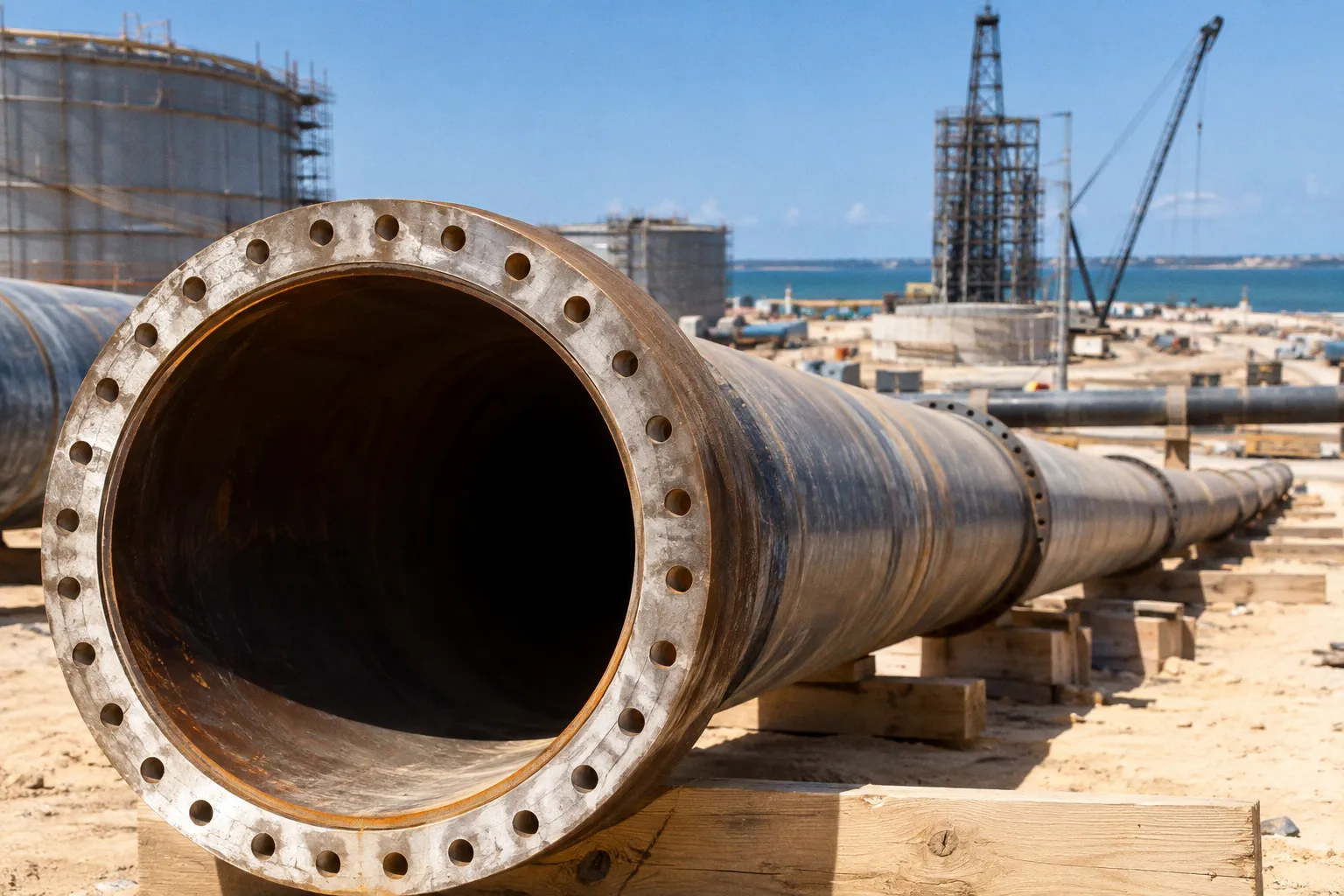
Deputy President Kithure Kindiki chaired a high-level inter-ministerial meeting to prepare for the ceremony, describing the Sh2.2 trillion Dangote project as a "one-in-a-generation investment." The plant, financed by Nigerian billionaire Aliko Dangote's industrial group, is targeted for operational commissioning by 2030.
The structural payload
The facility is engineered as the largest refinery in East Africa and one of the largest on the continent. Build-out is expected to require more than 60,000 workers, with roughly half in skilled trades. Dangote Industries plans to finance construction through internal cash, bond issuance, and proceeds from a planned initial public offering; the latest cost estimate sits between $15 and $16 billion. A 30 percent equity stake has been offered to East African governments, with Kenya allocated approximately 10 percent — valued at around $500 million. Rwanda and Ethiopia are evaluating participation.
The supply architecture
The refinery's economics rest on regional crude production Kenya does not yet produce at commercial scale. Advisers cited in the report estimate that East African producers could eventually supply more than 600,000 barrels per day — roughly 350,000 from South Sudan, 250,000 from Uganda, and 120,000 from domestic fields. Until those volumes materialize, the plant will depend on seaborne crude imports. Its placement alongside the Lamu deep-water port and the Lapsset corridor is intended to support crude intake, refined-product export, and downstream petrochemical storage.
A mechanical reading
A facility of this magnitude is, before it is economic, a load-bearing system. Pipelines operate under sustained internal pressure; storage vessels hold hydrostatic load; structural steel absorbs thermal stress through repeated cycling. The vocabulary of tolerance, fatigue thresholds, and scheduled maintenance intervals applies as cleanly to this infrastructure as it does to connective tissue networks under chronic load. The project's current dependence on feedstock that does not yet exist at scale is also a structural observation: any complex system, engineered or biological, requires sustained input to operate. Architecture without throughput is inert — a frame with no load, a vessel with no flow.
For practitioners, the practical takeaway is limited but specific. Track regional air-quality reporting along the Kenyan coast as construction advances, observe how the project's output reshapes fuel pricing across East Africa, and note whether the 2030 commissioning target holds once regional crude logistics stabilize.