Samsung E&A Secures $3.47 Billion Contract for Sabic’s New Jubail Fertilizer Complex
465 billion engineering, procurement, and construction contract has been awarded to Samsung E&A for Sabic Agri-Nutrients' San VII facility in Jubail Industrial City, according to MEED.
Alaric Calloway·updated September 13, 2026
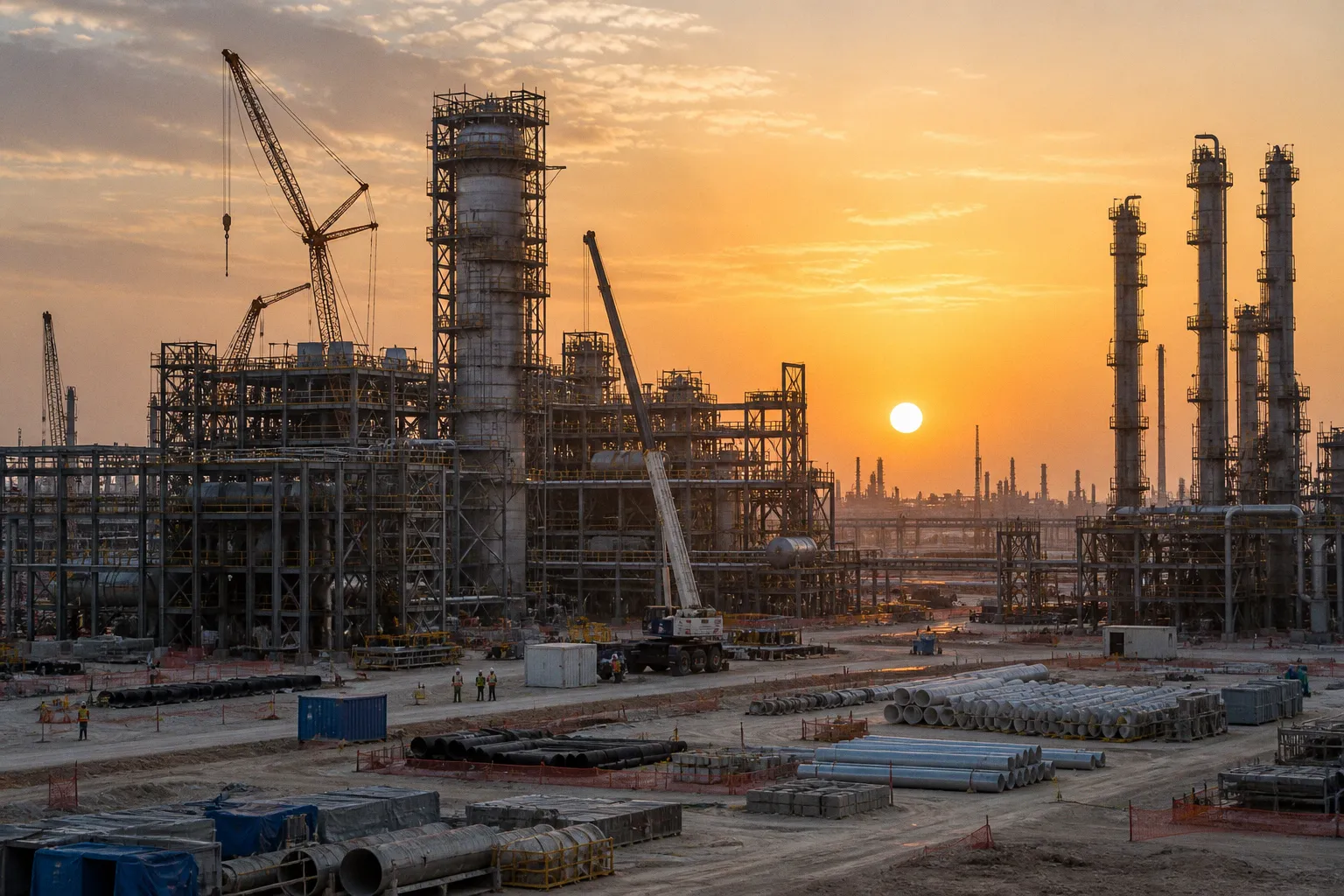
A $3.465 billion engineering, procurement, and construction contract has been awarded to Samsung E&A for Sabic Agri-Nutrients' San VII facility in Jubail Industrial City, according to MEED. The build adds 1.2 million metric tonnes per year of conventional ammonia and 2.6 million metric tonnes per year of urea, with a post-combustion carbon capture unit integrated into the scope. For practitioners outside the petrochemical sector, the relevance sits upstream of the mat: industrial scale, emissions infrastructure, and the material conditions your body operates within before any asana begins.
What the Scope Covers
Three structural components define the San VII contract:
Ammonia train. 1.2 million metric tonnes per year of conventional ammonia output, serving as the upstream feedstock for the downstream nitrogen product line.
Urea train. 2.6 million metric tonnes per year of urea output, routed through granulation for solid fertilizer product.
Post-combustion carbon capture. A unit designed to intercept CO₂ from the flue gas stream after combustion rather than at the reformer. This is the structurally significant addition: it signals the operator is engineering within the existing hydrocarbon framework rather than displacing emissions to unbuilt future infrastructure.
Why This Reaches the Practitioner
Industrial complexes of this scale shape regional baselines for ambient particulate load, water demand, and thermal output. These are upstream inputs for any body operating in the surrounding geography. Respiratory sensitivity, recovery capacity, heat tolerance, and the baseline tension patterns carried into a session are all partially set by the environment's industrial metabolism. The San VII project is one variable in that equation — not the only one, but worth registering.
What to Track
- Commissioning milestones for each train (ammonia first, urea second).
- Disclosed capture-rate data once the carbon capture unit is operational.
- Regional air quality reporting for Jubail Industrial City post-commissioning.
- Any disclosed water withdrawal figures against the facility's desalination footprint.
The structural question is whether the carbon capture unit operates at its specification rate. If it does, San VII becomes a reference case for retrofit-scale emissions control inside a live hydrocarbon supply chain. If it underperforms, it becomes evidence that capture infrastructure is decorative rather than mechanical — a distinction worth tracking for anyone assessing whether heavy industry can decarbonize at the unit-operation level rather than outsourcing the problem downstream.