New 300-Tonne Liebherr Crane Joins the Brazilian Industrial Fleet
Vertikal.net reports that Brazilian crane rental specialist Guindastes Centro Oeste has taken delivery of Brazil’s first 300-tonne Liebherr LTM 1300-6.4 all-terrain crane, equipped with the Liccon3 control system and a 90-metre telescopic boom.
Alaric Calloway·updated September 05, 2026
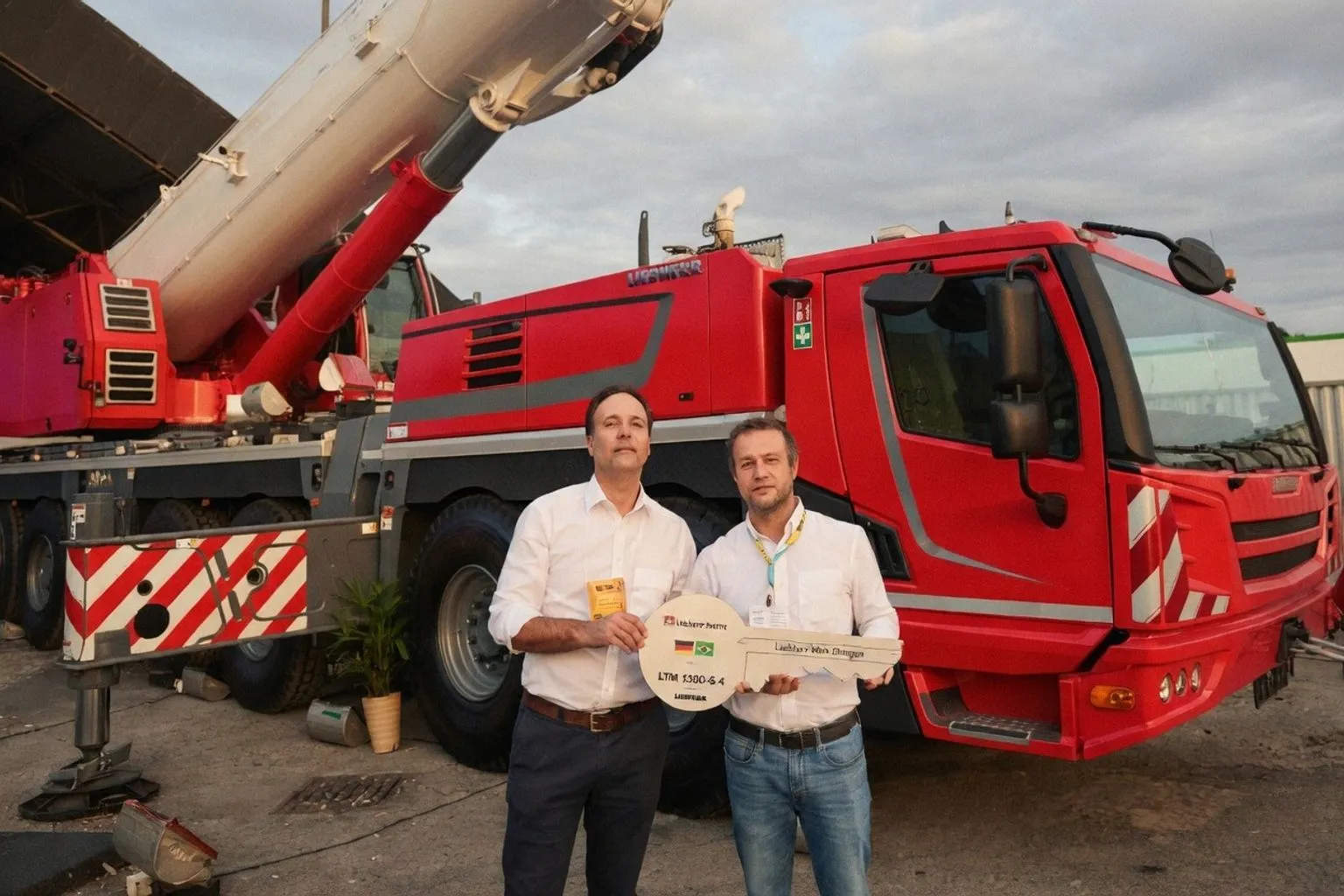
The machine is slated for heavy industrial operations, turnaround maintenance, and module installations in the petrochemical and steel sectors. For engineering and construction teams, the practical question is how this combination of capacity, reach, and control equipment fits a specific lift plan.
Capacity, reach, and working geometry
The confirmed configuration establishes two primary variables: a 300-tonne capacity and a 90-metre telescopic boom. These figures should be read as machine specifications, not as a universal lifting limit. The available report does not provide a load chart, so it does not show how capacity changes with boom length, radius, configuration, or attachment use.
That distinction is critical in structural steel and petrochemical work. A long boom can improve vertical and horizontal access, while a high nominal capacity does not by itself establish what can be lifted at the required working radius. Before mobilization, the project team should obtain the configuration-specific load chart and compare it with the dimensions and mass of the intended load.
The stated applications provide a useful scope check. The crane is intended for:
- heavy industrial operations;
- turnaround maintenance;
- module installations;
- work in petrochemical and steel environments.
This is not evidence that the LTM 1300-6.4 is automatically suitable for every lift in those sectors. Site access, required radius, boom geometry, ground conditions, attachment requirements, and coordination with the lift plan still need to be examined separately.
Control system and operating discipline
Vertikal.net identifies Liccon3 as the crane’s control system. That confirms the system installed on this machine, but the report does not provide operating data covering control response, setup procedures, diagnostics, or operator training requirements.
For project planning, the control system should therefore be treated as a verification point rather than a performance conclusion. The relevant questions are practical and mechanical: whether the assigned operators are familiar with the system, what information is displayed during setup, and how the available controls fit the procedures used for the planned lift.
A useful review should also separate confirmed equipment details from assumptions:
- Confirm that the offered machine is the Liebherr LTM 1300-6.4 with the stated 300-tonne capacity.
- Confirm the 90-metre telescopic boom configuration.
- Confirm the inclusion and operating status of Liccon3.
- Request the load chart for the exact boom and attachment arrangement.
- Match the machine to the stated application category: heavy industrial work, turnaround maintenance, or module installation.
- Identify any project-specific constraints that are not addressed in the published report.
The strongest evidence currently available concerns the machine’s arrival, its principal specifications, and its intended industrial role. It does not identify a commissioning date, a first project, a completed lift, or measured performance on a particular site.
What to verify before booking
Centro Oeste’s new crane adds a defined 300-tonne, 90-metre option to Brazil’s lifting fleet. Its value to an industrial project will depend on whether the complete lifting configuration remains appropriate for the required work.
Before committing, request the configuration-specific capacity data and compare it with the planned working radius. Define the intended operation precisely. Check that the machine, boom, control system, and attachments align with that operation. Finally, establish who will operate the crane and what familiarization or site-specific preparation is needed.
Until those points are documented, the 90-metre boom and 300-tonne rating describe the crane’s starting specification. They do not replace a lift plan, a current load chart, or site-specific engineering review.