Fired Heater Refractory: Castable vs Ceramic Modules
A fired heater refractory specification is not one decision. It is four simultaneous engineering problems welded together: thermal compliance with API 560 casing temperature limits, mechanical…
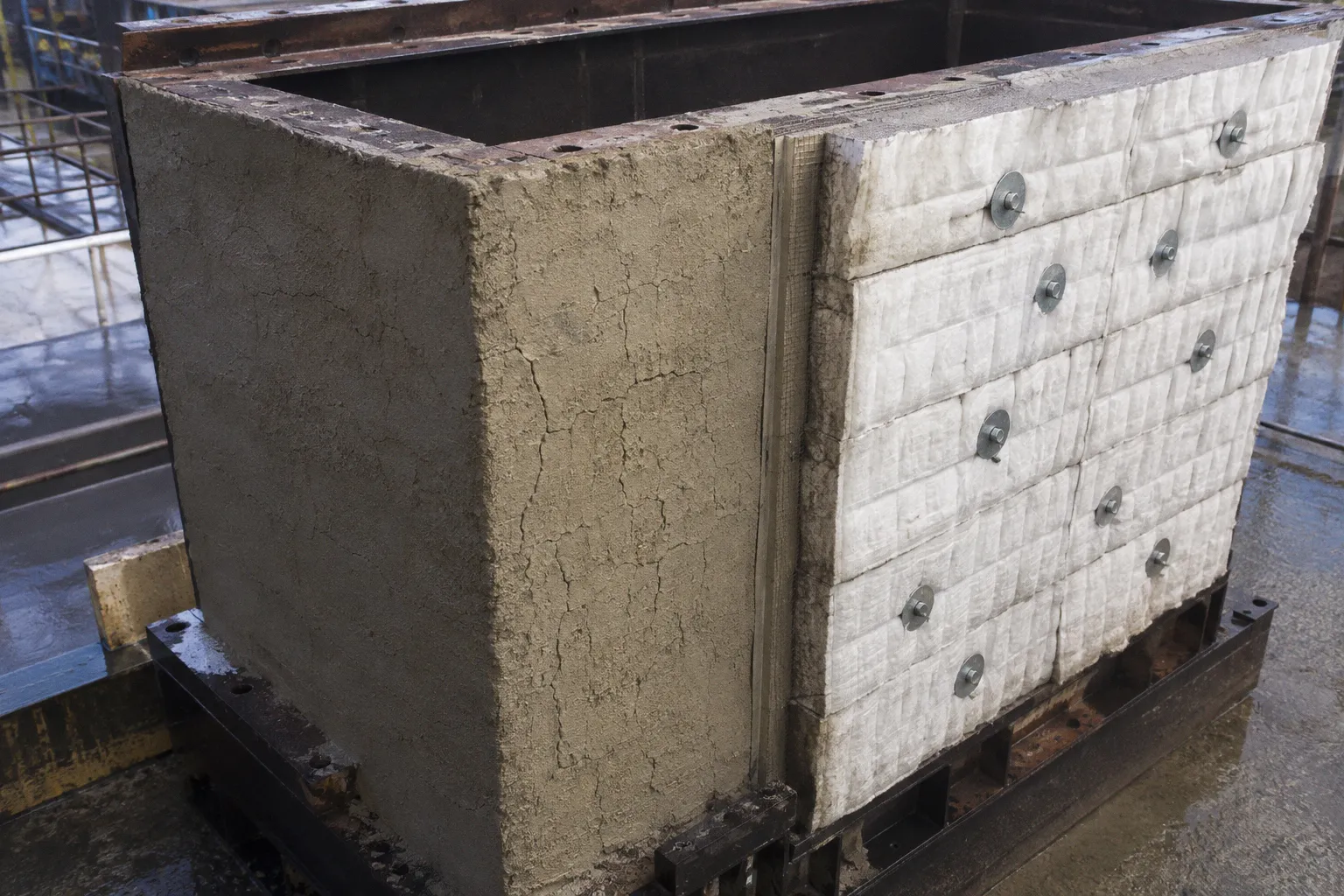
A fired heater refractory specification is not one decision. It is four simultaneous engineering problems welded together: thermal compliance with API 560 casing temperature limits, mechanical resilience against flue gas velocity, installation logistics against turnaround duration, and structural load against the support steel it sits on. Two lining systems dominate modern petrochemical practice — dense or insulating castable refractory, and ceramic fiber modules. Each imposes a different cost on each axis. The engineer's task is not to pick a "better" material in the abstract. It is to map the constraints of a specific radiant or convection section onto the system that satisfies them with the least downstream penalty.
This is the structural analysis that follows: casing temperatures, velocity thresholds, dry-out schedules, dead load, and inspection regimes — broken into the variables that actually drive the specification.
Thermal Performance and API 560 Casing Temperature Compliance
API 560 — first issued in 1986, with the 5th edition published in 2016 — sets the thermal boundary condition that every fired heater lining must satisfy. Under standard ambient conditions (27°C air temperature, 0 m/s wind speed), the outer metal casing must not exceed 82°C (180°F) on walls or 90°C (195°F) at the floor.
These numbers are not advisory. A lining that drives casing temperatures above the API ceiling fails the design regardless of how well it performs internally. Personnel protection, convective heat loss to the surrounding battery limit, and coating survival on the outer shell all hinge on this single limit.
The two systems reach the ceiling through different thermal paths. Dense castable refractories — typically a mix of calcium aluminate cement with aggregates — carry low thermal conductivity in the insulating grades but require substantial thickness to drop the cold face temperature to the casing target. Insulating castables reduce that thickness but introduce porosity that the engineer must verify against service conditions. Ceramic fiber modules, with service temperatures up to roughly 1300°C and substantially lower bulk thermal conductivity, achieve the same casing temperature at a fraction of the lining depth. The trade-off is mechanical, not thermal: thinner lining means less mass between the hot face and the casing, which is exactly the property API 560 is measuring.
API 560 casing temperature limits define the boundary between a compliant lining and a rejected one — the engineer is not designing for insulation, but for a measured cold-face outcome.
Mechanical Durability and Flue Gas Velocity Constraints
Thermal compliance solves half the problem. The other half is what the flue gas does to the hot face.
Ceramic fiber blanket refractory, when installed without protection, has a maximum design flue gas velocity of 12 m/s (40 ft/sec). Above that threshold, fibers erode, the lining thins, casing temperatures rise, and the API 560 ceiling is breached from the inside out. Where convection sections operate above 12 m/s — common in modern high-duty ethylene cracking and continuous reformer service — bare ceramic fiber blanket cannot be specified without protective measures: metallic shrouding, rigidizer coatings, or a transition to a denser lining at the high-velocity zones.
Dense and insulating castable refractories tolerate substantially higher gas velocities because the hot face is a continuous mineral matrix, not a felted fiber structure. The penalty is weight, thermal mass, and the dry-out requirement discussed below.
Anchor layout follows from this. Ceramic fiber modules are typically attached via welded studs or proprietary clip systems on a defined grid — module size, anchor spacing, and orientation all factor into how the lining behaves under vibration and thermal cycling. Castable linings require a denser anchor pattern, often with hexagonal mesh and refractory anchors, because the castable must be retained mechanically until it has cured and densified.
The practical specification rule: ceramic fiber modules belong in radiant sections and lower-velocity convection zones; castable belongs where velocity, abrasion, or mechanical impact would destroy a fibrous lining.
Installation Logistics: Dry-out Schedules vs Modular Assembly
Installation duration is where the two systems diverge most sharply on a petrochemical job site.
Castable refractory installation is a wet process. Dry powder is mixed with water at a controlled ratio, then either poured, vibrated, or gunned onto the prepared surface. After placement, the lining must cure, then undergo a controlled bake-out — a programmed heating cycle that drives free and chemically bound moisture out of the castable before the heater is brought to operating temperature. Skipping or rushing the bake-out produces steam-driven spalling, cracking, and premature failure. The bake-out schedule on a large furnace can run for several days, sometimes longer, and it ties up the heater before it can be commissioned.
Ceramic fiber modules require no dry-out. They are installed dry, compressed into anchor systems, and the heater can be brought up to operating temperature without an interim baking cycle. The schedule saving is not marginal — on a major turnaround, the absence of a multi-day bake-out is often the single largest economic argument for ceramic fiber in qualifying service zones.
The counter-argument is repairability. Castable can be patched in place with a small mix batch and a localized cure. Damaged ceramic fiber modules are typically removed and replaced as units, which is straightforward but requires the correct module on hand.
| Parameter | Castable Refractory | Ceramic Fiber Modules |
|---|---|---|
| Installation method | Wet mix, poured or gunned | Dry compression into anchors |
| Dry-out / bake-out required | Yes, multi-day controlled heating | No |
| Maximum flue gas velocity | High (limited by anchor and matrix) | 12 m/s without protective measures |
| Relative weight | High (dense) or moderate (insulating) | ~1/10 of refractory brick systems |
| Maximum service temperature | Grade-dependent, typically ≤1300°C | Up to ~1300°C |
| Repair in service | Localized patching | Module replacement |
Weight Efficiency and Structural Load Considerations
The refractory lining is dead load on the furnace shell, the support steel, and the foundation. Ceramic fiber weighs roughly one-tenth of equivalent traditional refractory brick systems. The mass difference is structural, not cosmetic — it changes the moment loads on the radiant coil supports, the sizing of the casing stiffening rings, and the foundation design under the convection section.
For grassroot units, the weight savings flow back into support steel and civil scopes. For revamps, the weight savings can be the decisive argument: an existing furnace shell rated for a castable lining may not tolerate a heavier brick lining without reinforcement, while a ceramic fiber retrofit typically falls within the original structural envelope.
The weight argument is not unconditional. Ceramic fiber modules under high-velocity gas require shrouding, and the shroud adds mass back into the system. The net weight advantage shrinks in protected-zone applications but rarely disappears entirely.
Quality Assurance and Inspection Standards per API 936
Material selection is only the input. The output is verified through API 936, the primary standard for quality control testing and inspection of refractory installations in petroleum and petrochemical fired heaters.
API 936 governs the inspection regime: anchor inspection before and after lining installation, density and thickness checks on castable placements, and verification that cured castable meets specification for thermal and mechanical properties. Documentation is per-installation, not per-material — every refractory zone on a fired heater carries its own inspection record.
For ceramic fiber modules, inspection focuses on anchor integrity, module compression, joint staggering, and the absence of gaps that would create hot spots on the casing. The testing burden is generally lighter than for castable because the material is factory-produced to controlled density and the installation is mechanical rather than chemical.
Castable refractory demands water, time, and a controlled bake-out. Ceramic fiber modules demand neither — and on a turnaround schedule, that single difference can decide the specification.
Practical Specification Notes
A few mechanical details that repeatedly determine whether the lining performs as designed:
1. Anchor spacing must match the lining system. Ceramic fiber module manufacturers publish module-specific anchor patterns; deviating from them produces unsupported spans that slump under thermal cycling.
2. Castable curing water quality matters. High-sulfate or contaminated mixing water migrates into the cement matrix and weakens the hot face. Site water is not automatically acceptable.
3. Joints in ceramic fiber modules must be staggered. Continuous joints across the hot face create a thermal short that elevates casing temperature directly above the joint, breaching API 560 in a localized zone even when the average lining depth is compliant.
4. Castable thickness must be verified, not assumed. Gunned application tends to over-shoot nominal thickness; poured placement can under-shoot. Both directions produce casing temperature deviations.
5. Inspection records must be filed per zone. API 936 traceability is not optional on fired heater work; missing documentation is a frequent cause of inspection hold-points during commissioning.
Closing Position
The castable-versus-ceramic-fiber decision is not a preference. It is a constrained selection against four independent variables — casing temperature, flue gas velocity, installation window, and dead load. Where velocity stays under 12 m/s, the turnaround schedule is tight, and the support steel is rated for the lighter load, ceramic fiber modules satisfy the API 560 thermal envelope with the least installation penalty. Where velocity, abrasion, or mechanical impact dominate the service condition, dense or insulating castable refractory remains the correct specification despite the dry-out cost.
The discipline is to specify each zone of the heater against the binding constraint of that zone, not against a default material carried over from the last project. Treating the lining as a single blanket specification is how API 560 ceilings get breached and how castable gets poured into zones where it will fail within a year.