U.S. Metals, Glass Furnace Additions & Rebuilds Add Up to Billions
Structural Rebounds in U.S. Heavy Industry: A Read-Out for Somatic Practitioners…
Alaric Calloway·updated September 09, 2026
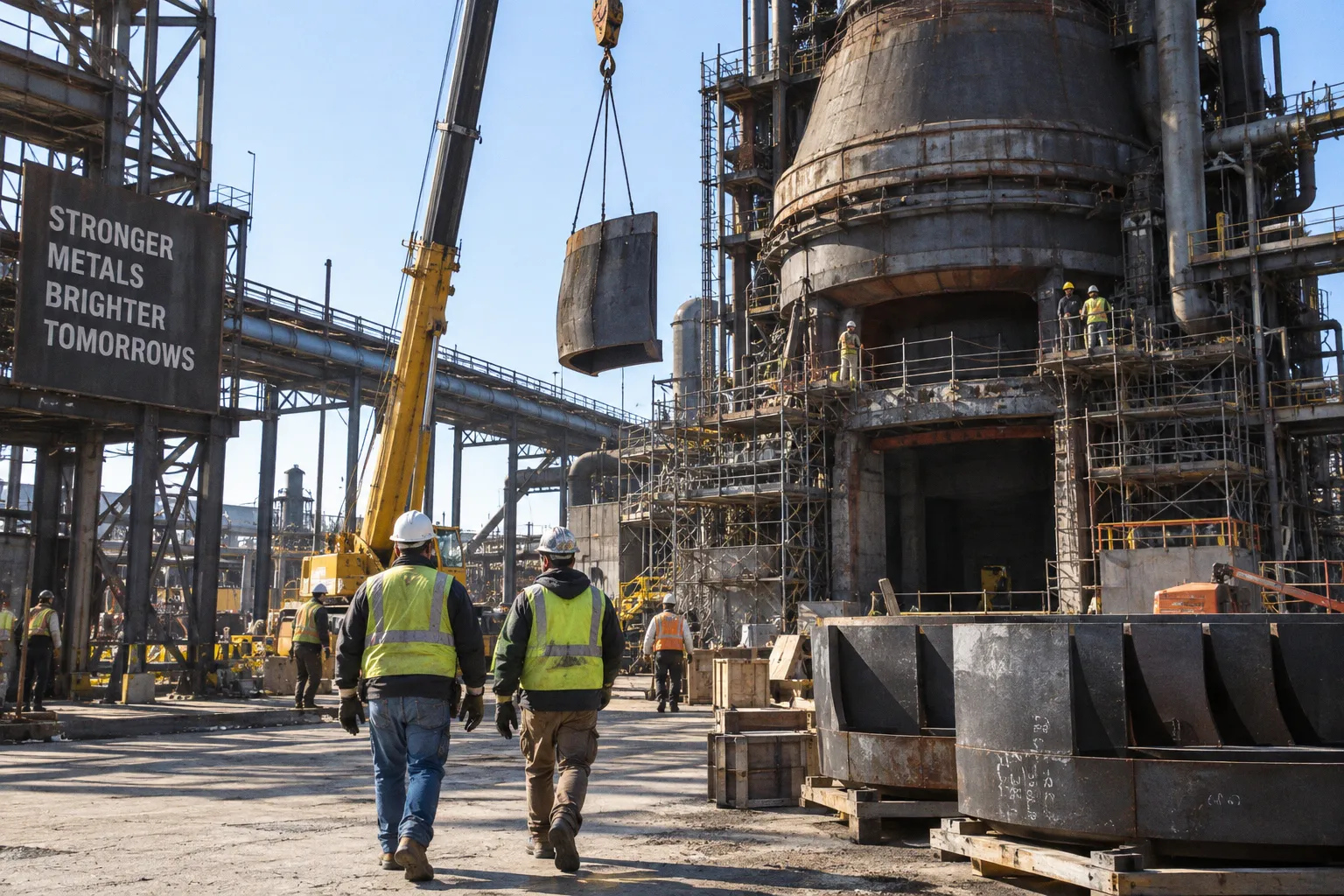
According to Industrial Info Resources, more than $3.8 billion in active and announced future spending is currently committed across roughly 120 U.S. industrial projects focused on furnace additions, structural rebuilds, and refractory relinings. The figure captures the mechanical lifecycle of high-temperature metallurgical assets — what gets replaced, when, and at what capital cost. For practitioners whose daily load is screen-mediated, the data point matters only as a structural backdrop: a reminder that the metal inside our devices, props, and the buildings we occupy is itself subject to scheduled maintenance cycles.
Where the Capital Is Concentrated
The portfolio is weighted toward modernization and component replacement rather than greenfield construction. A representative case is Gerdau Ameristeel's electric arc furnace replacement in Midlothian, Texas — a swap-out of the primary melting vessel within an existing facility. Refractory relinings, the thermal-containment layer inside a furnace, feature prominently in the project count, alongside structural rebuilds of associated process equipment. The 120-project total spans the metals and minerals sector.
The Gary Works Benchmark
The most concrete data point in the cluster, as reported by the Association for Iron & Steel Technology, is United States Steel Corporation's return of its largest blast furnace at Gary Works to operational service following a $350 million relining and structural overhaul. The campaign modernized the high-temperature furnace lining and critical operational components. The vocabulary maps cleanly onto a maintenance frame familiar to any structural reader: remove the compromised interface, replace the load-bearing substrate, resume function under monitored conditions.
What This Means for Your Practice
Nothing direct. The integrity of your screen, your prop hardware, or the steel framing behind your studio wall is not observably affected by these project decisions in the near term. What the data does establish is that large-scale structural rebuilds in heavy industry are proceeding at announced budgets and on announced schedules — a baseline of systems-level reliability that does not require any intervention on the practitioner's part.
The practical action item is inventory, not investment. Hardware in continuous service for an extended period occupies the same lifecycle category as a furnace approaching its next reline interval. Check hinge tension on devices used daily for practice. Check fastener integrity on any load-bearing prop. Check the floor surface under your mat for any subtle give or unevenness. Proprioceptive load accumulates faster than conscious attention registers it, and the body's response to small structural faults surfaces as compensation patterns before it surfaces as a named symptom.